

Are we all really going to pay for AI separately, forever? That is the question I keep coming back to.
Because let us be honest, most people never will. I have been watching the LLM market for a while now, and the thing that keeps standing out to me is not the models themselves. It is how regular people actually behave.
The companies building the biggest models are thinking like labs and research institutes. But the companies that live with everyday users understand something different. They know the average person is not as tech-savvy as the AI world assumes. HP still runs support lines teaching people how to connect to the internet, decades after the PC went mainstream. So the idea that everyone will become a prompt engineer paying for yet another subscription was never realistic.
These companies understand AI will simply become another button. Something quietly sitting inside Excel, inside your browser, inside Word. Not a separate app you log into, and not another monthly bill. Just there.
Now, I know the first attempts at this felt premature. When Microsoft pushed AI hardware like the NPU, it was too early. Honestly, it is still a little early even today. But that is not really the point. The point is the direction. Look at where things are going. A model like Gemma is already huge in capability yet small enough to run on modest hardware, and it keeps getting more compact. At the same time, chipsets are getting more and more efficient at AI work. Those two trends are heading straight toward each other. The day a laptop runs a genuinely capable model on the device, smoothly and for free, is closer than most people think.

| ASUS ROG Zephyrus G14 2025 | $2,519.99 in Amazon | |

| ASUS ROG Strix G16 (2025) | $2,611.87 in Amazon | |

| Lenovo Legion Pro 7i | $2,659.08 in Amazon | |

| Lenovo LOQ 15.6 | $2,229.99 in Amazon | |

| ASUS ROG Flow Z13 (2025) | $2,707.99 in Amazon |
You can already see the pieces lining up. NVIDIA has introduced something called the RTX Spark, a single superchip that fuses its AI and graphics power and is built to run capable models locally on slim Windows laptops and small desktops. It carries up to 128GB of unified memory, enough to run serious models right on the machine, and the desktop versions are designed to keep personal AI agents running at your desk all day. Here is the part I find smart. The laptops carrying it are not obscure. They include machines from Dell, HP, Lenovo, Asus, and even Microsoft’s own Surface. So Microsoft is quietly putting local AI silicon into its flagship laptop. On the other side of the fence, Apple has been making its own chips run models efficiently on the device through frameworks like MLX. The hardware story is no longer about frame rates or battery life alone. It is about how much intelligence you can run locally.

| ASUS Dual NVIDIA GeForce RTX 5060 | $354.99 in Amazon | |

| MSI Gaming GeForce RTX 3060 | $385.22 in Amazon | |

| GIGABYTE Radeon RX 9070 XT | $649.99 in Amazon | |
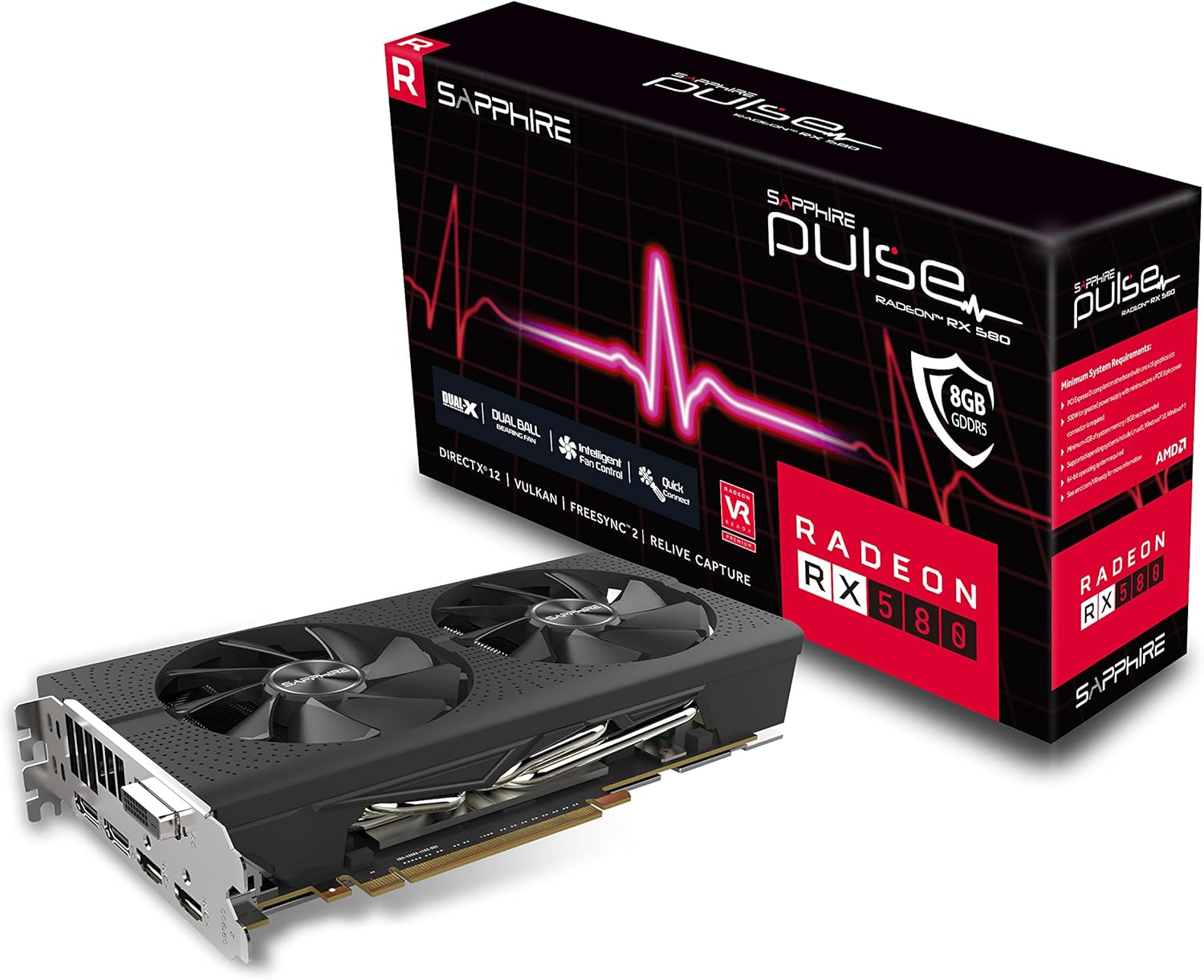
| Sapphire Radeon 11265-05-20G Pulse RX 580 | $439.00 in Amazon |
And here is the part I find most telling. The pure device makers, Dell, Lenovo, Asus, do not really have a horse in the big-model race. They make machines. They would rather the intelligence live on the device they sell than depend forever on someone else’s cloud. The clear exception is NVIDIA, because NVIDIA sells the shovels for the entire gold rush. To be fair, the lines are blurring even here, since some of these makers are starting to partner with the labs directly. But the underlying instinct is the same. Get AI onto the device.
So I genuinely believe we will soon see machines that ship with not just Windows, but a capable local model baked in. Picture the sticker on the lid, the same way we grew up seeing “Intel Inside.” For the regular consumer and the office worker, this is the dream. Fast, private, offline, and no extra cost after the hardware is paid for.
This does not mean the big models die. Far from it. When you are working on something at NASA scale, or biomedicine, or drug discovery, or anything that needs huge data processing and deep reasoning, you still need the frontier models. That is their lane, and it is a strong one. So this is a hybrid future of AI. Local for the everyday, frontier for the moonshots.
Now, here is my personal hunch, and maybe I am wrong, but I think it is worth saying out loud. The big labs are sitting on enormous spending. The numbers around AI infrastructure are staggering, hundreds of billions a year, and the revenue coming back is still a fraction of that. When you commoditize the “good enough” layer and push it onto local devices for free, you put real pressure on the companies betting the farm on people paying premium prices forever. I am not saying they collapse. I am saying the math gets uncomfortable, and I think they feel it.
You can already see them reacting. Anthropic has moved toward heavier, Mythos-class models and a more guarded, safety-tiered release strategy. OpenAI has softened its tone on aggressive, race-ahead development and started talking more about broad benefit and responsibility. To me, that reads like companies adjusting to a world where the easy money assumption is no longer guaranteed.
But here is the part that actually worries me, and it has nothing to do with money.
Right now, it is developers reaping the real benefits of AI, and that is already huge. The next wave reaches the regular office worker. And here is the thing, they will not become power users. They are not going to learn prompt engineering or tune settings. They will simply embrace the button. AI inside Word, inside Excel, inside Outlook, quietly doing the boring parts for them. After that, it reaches students. And students are where I get nervous.
To be a real critical thinker, you have to know a lot. You need information in your own head before you can connect the dots. If AI does all the connecting for you, we risk raising a generation that produces polished work but cannot reason its way through a hard problem.
And the irony is that this era needs more critical thinkers, not fewer. AI only becomes powerful when you can give it rigorous, to-the-point instructions and judge whether the output is any good. Without that, it stays exactly what it is right now, a conversation in a chat box. Shiny, but shallow.
So the winners will not be the best prompt writers. They will be the people who know things, who stay curious, who can direct AI like a sharp teammate instead of leaning on it like a crutch.
That is my read on where we are heading. Local AI wins on volume over time. Frontier models stay premium for the hard problems. And the humans who keep thinking for themselves win across the board.
Are you seeing the same shift in your work? I would love to hear it.