
The default advice on smartwatches has always been simple: match the watch to the phone. Apple user, Apple Watch. Samsung user, Galaxy Watch. Done.
But when did brand loyalty become a good reason to spend $400?
A teacher in her late 30s bought the Apple Watch Series 9 because she had an iPhone. Used it for step counting. Charged it every night. Never looked at half the features. Switched to the Garmin Venu 4 on a whim six months later and discovered sleep tracking, Body Battery scores, and ten days of battery life she never knew she was missing. The right smartwatch has almost nothing to do with which phone is in your pocket. It has everything to do with what you actually need on your wrist. We tested five of the best smartwatches in 2026 across health, fitness, AI features, and battery life. Here is the honest breakdown.
TL;DR
- Apple Watch Series 11 is the best overall smartwatch for iPhone users right now
- Google Pixel Watch 4 is the top pick for Android users who want deep AI integration
- Samsung Galaxy Watch 8 offers the best balance of design and daily health tracking
- Samsung Galaxy Watch Ultra is the rugged choice for serious athletes
- Garmin Venu 4 wins on battery life and is the best smartwatch for health monitoring
- All five support heart rate, SpO2, sleep tracking, and emergency SOS
- Prices range from $329 to $499 — each one earns its price for a different reason
The Best Smartwatch Is Not the Most Expensive One
Everyone says buy the Apple Watch. Or the Samsung. Or go with Garmin if you’re serious about fitness.
But which one is actually right for you?
That’s the question nobody answers properly. Most lists just stack specs side by side and call it done. We are going to do something different. We are going to tell you what each watch is actually good at, where it falls short, and who should skip it entirely. Five watches. Five real use cases. Let’s get into it.
Best Smartwatch in 2026: Our Top Picks
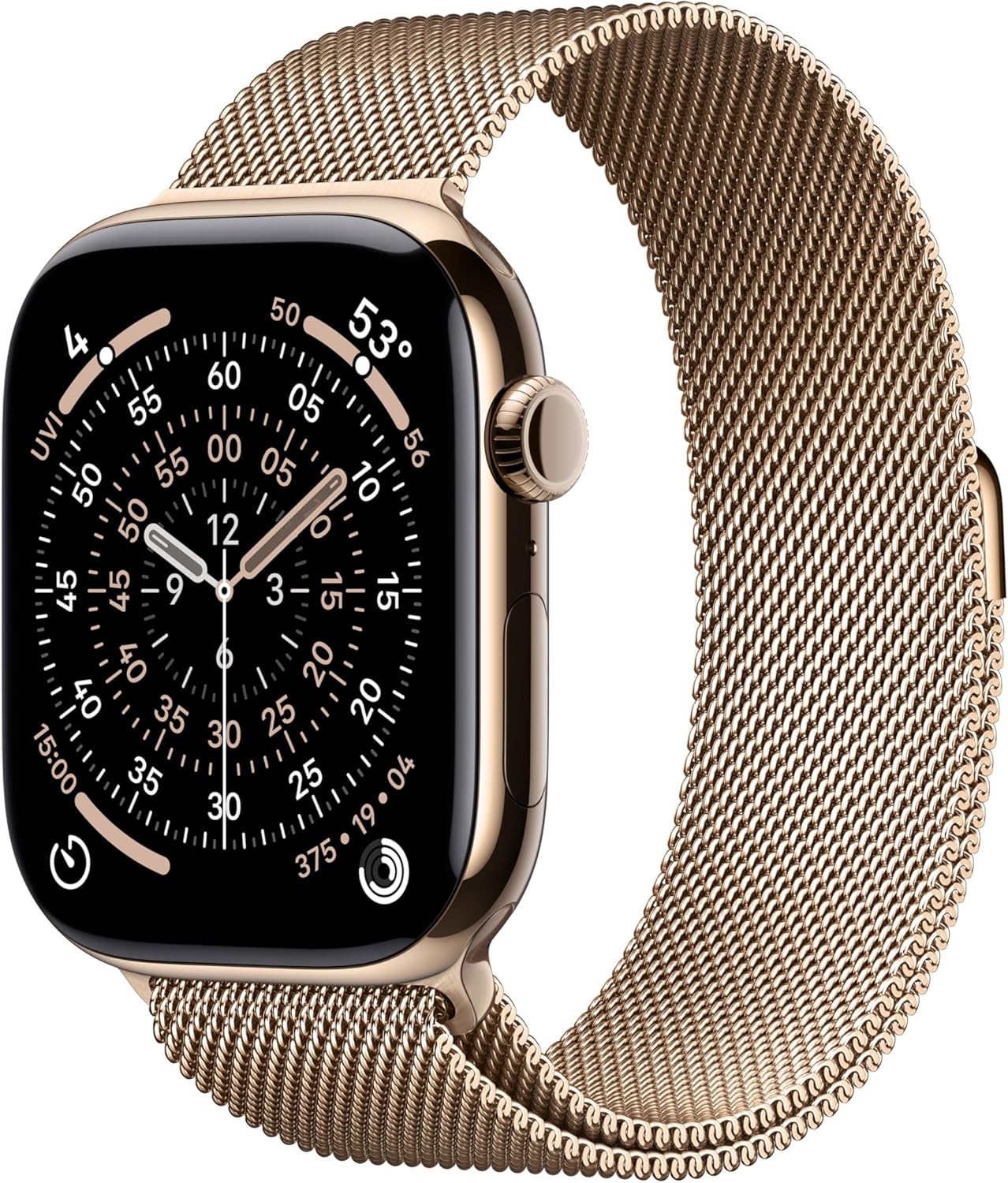
| Apple Watch Series 11 | $799.00 in Amazon | |

| Google Pixel Watch 4 | $309.99 in Amazon | |

| Samsung Galaxy Watch 8 (2025) | $349.99 in Amazon | |

| Samsung Galaxy Watch Ultra (2024) | $448.25 in Amazon | |
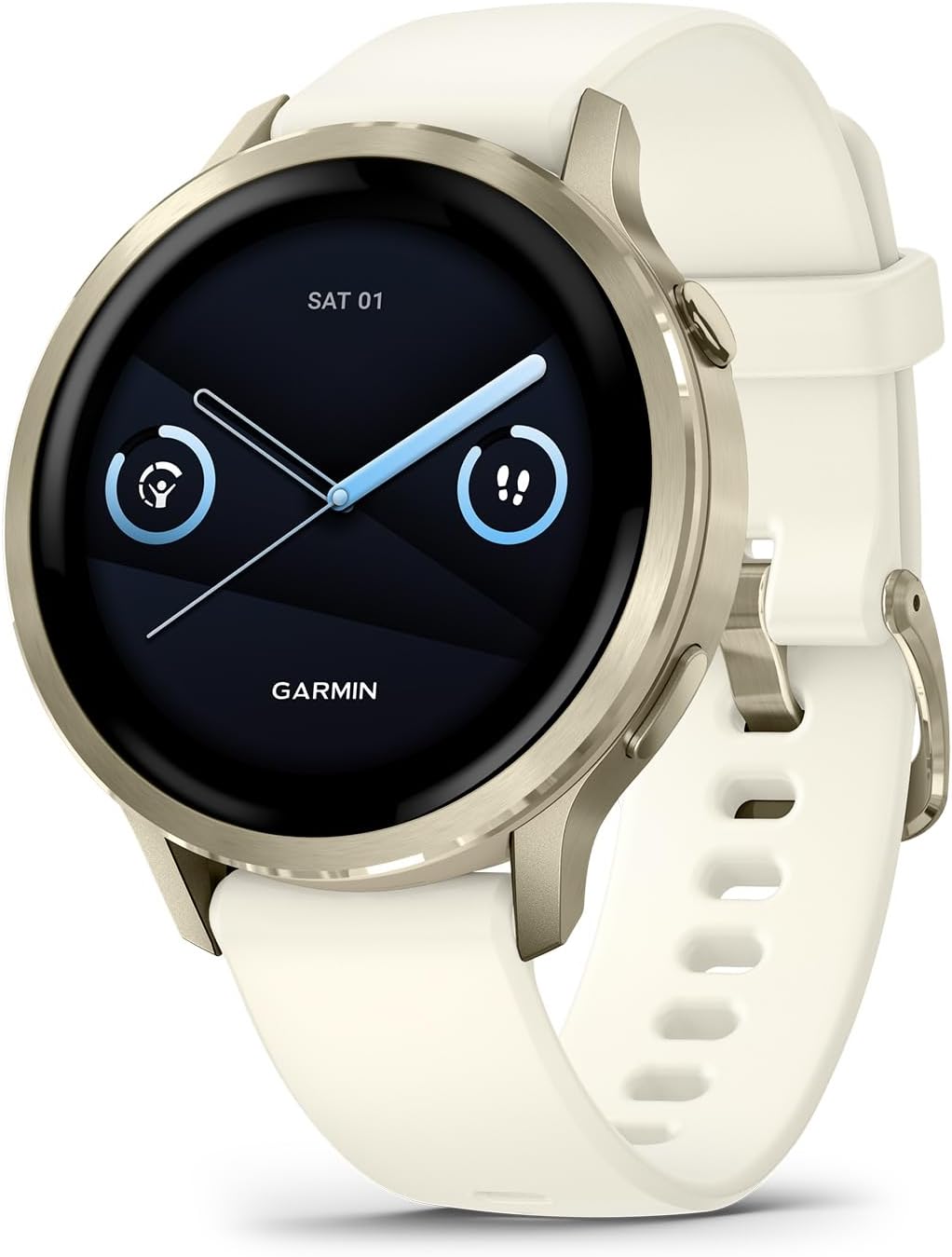
| Garmin Venu® 4 | $549.99 in Amazon |
1. Apple Watch Series 11 — Best Overall for iPhone Users
A nurse in her mid-40s starts wearing the Apple Watch Series 11 because her doctor flagged irregular heart rhythm patterns during a routine checkup. Within three weeks, the watch catches two more irregular rhythm events she had no idea were happening. Her cardiologist reviews the ECG data from the watch and adjusts her medication. That is what this watch is actually for.
The Series 11 is Apple’s most medically capable watch yet. It can detect signs of hypertension and flag possible sleep apnea, features that simply did not exist on Series 10. The ECG app works on demand. You get blood oxygen readings, a sleep score, and a Vitals app that pulls together overnight health data into something you can actually understand in the morning.
The display is stunning. Up to 2,000 nits of brightness, always-on, and 2x more scratch-resistant than the previous generation. Battery life hits 24 hours of normal use, which is not great compared to Garmin but is solid for an Apple Watch. The fast charge is a real lifesaver — 15 minutes gets you 8 hours of normal use.
What it’s genuinely good at:
- Deep iOS integration — notifications, calls, Apple Pay, and Handoff all just work
- Health monitoring at a clinical-adjacent level
- Workout tracking across dozens of activity types, including swimming (50m water resistance)
- Crash Detection and Fall Detection that actually respond when you need them
Where it falls short:
- Needs charging every day, no exceptions
- Only works well if you’re in the Apple ecosystem
- Some advanced features require the paired iPhone nearby
The Apple Watch Series 11 holds the number one spot on Amazon’s smartwatch bestseller list for good reason. If you are an iPhone user and you care about health tracking more than battery life, this is your watch.
Check the current price or offers on Amazon
2. Google Pixel Watch 4 — Best for Android Users
Here’s what is actually happening with the Pixel Watch 4: it is the first smartwatch that genuinely feels built around an AI assistant rather than bolted onto one. Gemini is baked into the hardware, not added as an app. You can tap your index finger and thumb together twice and ask it anything, like set a timer, send a text, or get a weather update, without unlocking your phone.
The round face is a design win. It looks like an actual watch, not a mini phone strapped to your wrist. The Actua 360 domed display is 10% larger and 50% brighter than the previous model, and the Gorilla Glass holds up surprisingly well in daily use.
Battery life is up to 30 hours on a standard charge, which puts it ahead of the Apple Watch. The new side charging dock can give you 15 hours of battery in under 15 minutes. For Android users, particularly those on Pixel phones, the pairing experience is seamless from the first minute.
The health stack is comprehensive: accurate heart rate tracking, SpO2, HRV, sleep insights with full stage breakdowns, and a Loss of Pulse Detection feature that can call emergency services if it detects your heart has stopped. There is also a satellite SOS for when you are off the grid.
What it’s genuinely good at:
- Gemini AI integration that is fast and contextually aware
- Accurate heart rate and sleep tracking powered by Fitbit algorithms
- 40+ exercise modes with dual-frequency GPS for precise route tracking
- Deep Android integration, best when paired with a Pixel phone
Where it falls short:
- Does not work with iPhones
- Fitbit Premium features require a subscription for the full picture
- The screen can scuff more easily than it should at this price
If you are already in the Google ecosystem and want AI health features without paying Apple prices, the Pixel Watch 4 is a serious contender for the best smartwatch under $400.
Check the current price or offers on Amazon
3. Samsung Galaxy Watch 8 — Best Balance of Design and Daily Tracking
The Galaxy Watch 8 is the watch for people who want everything to work without thinking about it. That’s a harder promise to deliver than it sounds.
Samsung nailed the design this year. The cushion-shaped case is thinner and lighter than the Watch 7, and the round AMOLED display at up to 3,000 nits is genuinely readable in direct sunlight. The new 3nm processor makes it snappier than any Galaxy Watch before it.
Sleep coaching on the Watch 8 has gotten seriously good. The Advanced Sleep Coaching feature now includes Bedtime Guidance, which learns your patterns over three nights and tells you the optimal time to go to sleep based on your wake-up time and actual sleep data. The Running Coach feature builds custom race plans for 5Ks and marathons, with real-time form feedback during runs.
Gemini lives here too, accessible by gesture, which gives it a strong advantage over older Android smartwatches. The Energy Score feature calculates your daily physical readiness based on sleep, heart rate trends, and activity from the previous day. It is a genuinely useful daily signal.
Battery life varies. The 40mm model runs on a 325mAh cell, which means heavy users will charge daily. The 44mm version with a 425mAh battery gets closer to two full days. It is the one legitimate complaint users come back to consistently.
What it’s genuinely good at:
- Automatic workout detection that works accurately
- One of the best sleep coaching systems on any smartwatch
- Gemini AI on the wrist with gesture activation
- Gorgeous display and premium build that looks right in any setting
Where it falls short:
- Battery life on the 40mm is a real limitation
- Full AI features require a Samsung Galaxy phone
- Some health features, like blood pressure tracking, need periodic calibration with a separate cuff
For Android users who are not on Pixel phones, the Galaxy Watch 8 is the best smartwatch in the $300 to $400 range. You can also pair it well with the best fitness trackers if you want a fuller picture of your activity data.
Check the current price or offers on Amazon
4. Samsung Galaxy Watch Ultra (2024) — Best for Athletes and Outdoors
The Galaxy Watch Ultra is not trying to be subtle. It is a 47mm titanium slab designed to survive things that would break a regular smartwatch.
A furniture delivery worker in Minnesota documented wearing his Watch Ultra through 13-hour shifts, burning 4,000 to 7,000 calories a day. The watch tracked every metric accurately. That kind of real-world durability test tells you more than any lab spec.
The titanium case is rated to 10ATM — you can swim in open water with it. The display hits 3,000 nits, making it readable even in harsh outdoor conditions. There is a Quick Button on the side that you can program to launch any app instantly, which is a feature the regular Watch 8 skips entirely.
The battery is a 590mAh cell, the largest in any Galaxy Watch, and it shows. Users consistently report 3 to 4 days of real-world use. The LTE version means you can leave your phone behind entirely on long runs or hikes and still take calls, get emergency SOS, and track your route.
Heart rate tracking with Galaxy AI filters out body movement noise during intense workouts, which makes readings significantly more accurate when you’re sprinting or doing HIIT. The watch also compares your current performance to previous sessions on the same route, which is a feature runners genuinely use.
What it’s genuinely good at:
- Rugged titanium build rated for serious outdoor conditions
- Best battery in the Galaxy Watch lineup by a wide margin
- LTE independence for athletes who train without a phone
- AI-powered performance comparison across workouts
Where it falls short:
- 47mm is a large watch — smaller wrists will feel it
- Expensive compared to the Watch 8 for non-athletes
- Still needs a Samsung phone for the full Galaxy AI feature set
If you are building a serious fitness setup, it pairs naturally with a handheld gaming console mindset — get the tool built for performance, not compromise.
Check the current price or offers on Amazon
5. Garmin Venu 4 — Best Smartwatch for Health Monitoring
The Garmin Venu 4 is the outlier on this list. And it earns its spot precisely because of that.
Everyone else is racing to add AI features, app ecosystems, and social integrations. Garmin does not care about any of that. What it cares about is accuracy, battery life, and giving you data you can actually act on.
Ten days of battery life. That is the headline. While every other watch on this list needs a charge every one to two days, the Venu 4 keeps going. Users consistently report a week to ten days of continuous tracking — heart rate, sleep, GPS workouts, all of it. A mechanical watch enthusiast who switched to the Venu 4 described it as the first smartwatch he could wear like a real watch, because he forgot it needed charging.
The Body Battery feature is one of the most useful single metrics in wearables right now. It tracks your energy reserves across the day. Using heart rate variability, sleep quality, and activity load gives you a single number between 0 and 100 that tells you whether to push hard or recover. It sounds simple. It is surprisingly accurate.
Sleep tracking on the Venu 4 is the most detailed on this list. You get full sleep stage breakdowns, a sleep score, a circadian alignment score, and breathing variation data tracked via Pulse Ox. The built-in flashlight is not a gimmick — it is a small LED that users consistently mention using more than expected.
More than 80 built-in sports apps cover everything from swimming and cycling to HIIT and mobility work. The Garmin Coach training plans are genuinely personalised to your fitness data. And because Garmin builds its own OS, updates are consistent across years of ownership, which is something no Android watch can promise.
What it’s genuinely good at:
- Best battery life in this entire category by a significant margin
- Most accurate and detailed sleep tracking of any watch on this list
- Body Battery energy monitoring that is genuinely predictive
- Works with both iPhone and Android without feature loss
Where it falls short:
- Fewer apps and third-party integrations than Apple or Samsung
- No built-in speaker for calls on the 41mm (45mm has one)
- Steeper learning curve — there is a lot of data to process
If your goal is serious health monitoring and you do not want to charge your watch every night, the Garmin Venu 4 is the best smartwatch for that specific job. If you already use fitness trackers and want to go deeper, this is the natural upgrade.
Check the current price or offers on Amazon
How to Pick the Best Smartwatch for You
The honest answer is that the best smartwatch is the one that fits how you actually live, not the one with the highest spec sheet.
Here is a quick decision guide:
You have an iPhone and care about health: Apple Watch Series 11
You have an Android phone and want AI features: Google Pixel Watch 4
You want the best everyday smartwatch from Samsung: Galaxy Watch 8
You train hard and need something built for it: Galaxy Watch Ultra
You want the best battery life and serious health data: Garmin Venu 4
One more thing worth knowing: smartwatches are becoming genuinely medical-grade tools. According to research published by the American Heart Association, wearable heart rate monitors are now accurate enough for clinical-adjacent monitoring in non-diagnostic settings. The Apple Watch Series 11’s hypertension detection and Garmin’s HRV tracking are not just features — they are early warning systems that have already changed outcomes for real people.
You do not need every feature on every watch. You need the right features for your life. Pick accordingly.
Also Worth Knowing
If you are thinking about the audio side of your tech setup, the way you pair your wearables matters. We have covered how active noise cancellation works in detail — useful context if you are choosing earbuds to pair with your new watch. And if you are building out a full desk setup, our curved monitor for productivity guide covers the display side of the equation.
For anyone managing their fitness routine with a broader toolkit, the best Bluetooth trackers are a useful complement to a smartwatch for tracking gear, bags, and keys during outdoor workouts.